Hawksmoor’s US Beef | The story behind every steak

Beyond the grade:

the making of a great steak

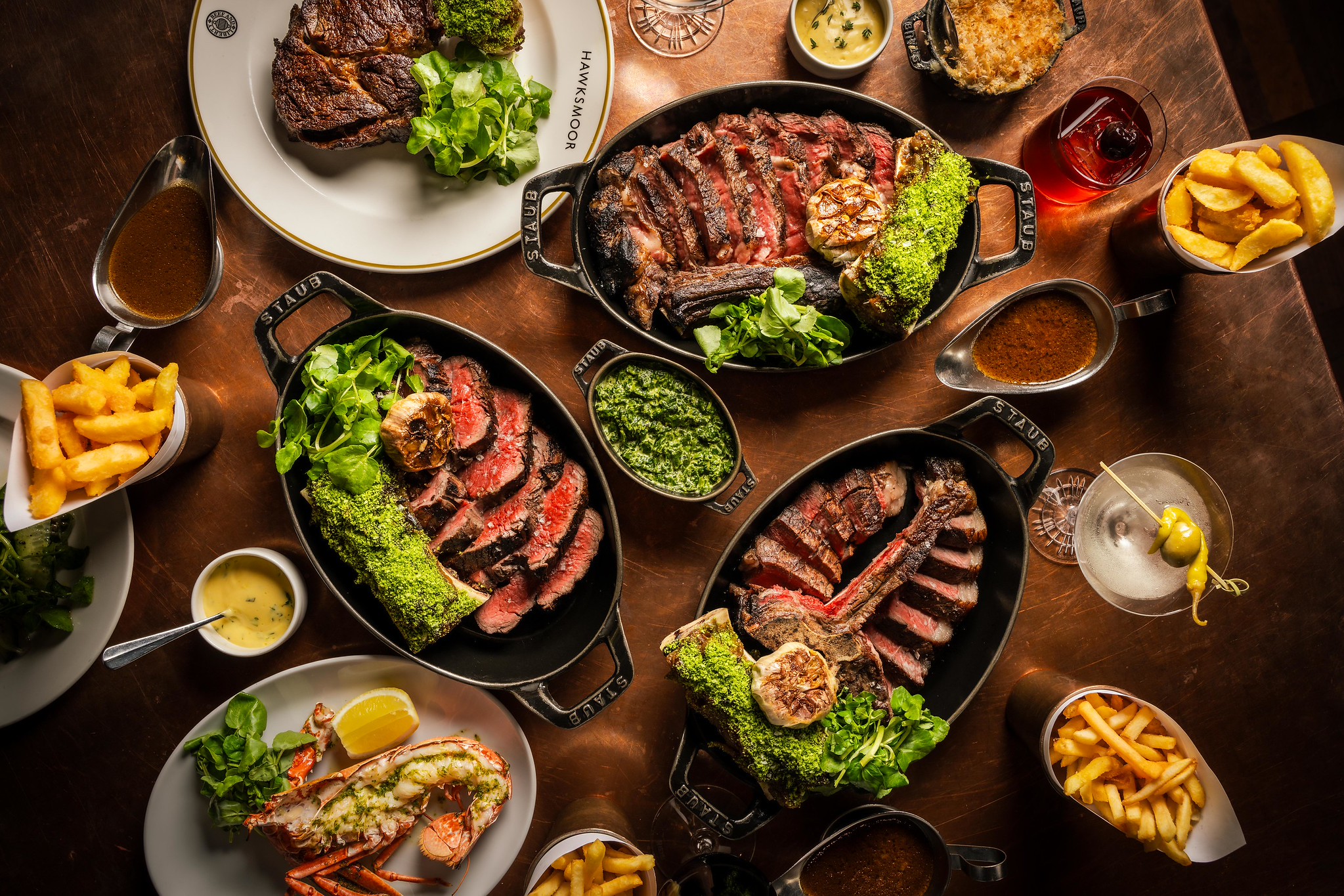
Overhead spread of sliced steaks in cast-iron dishes with fries, lobster, watercress, sauces and cocktails on a wooden table
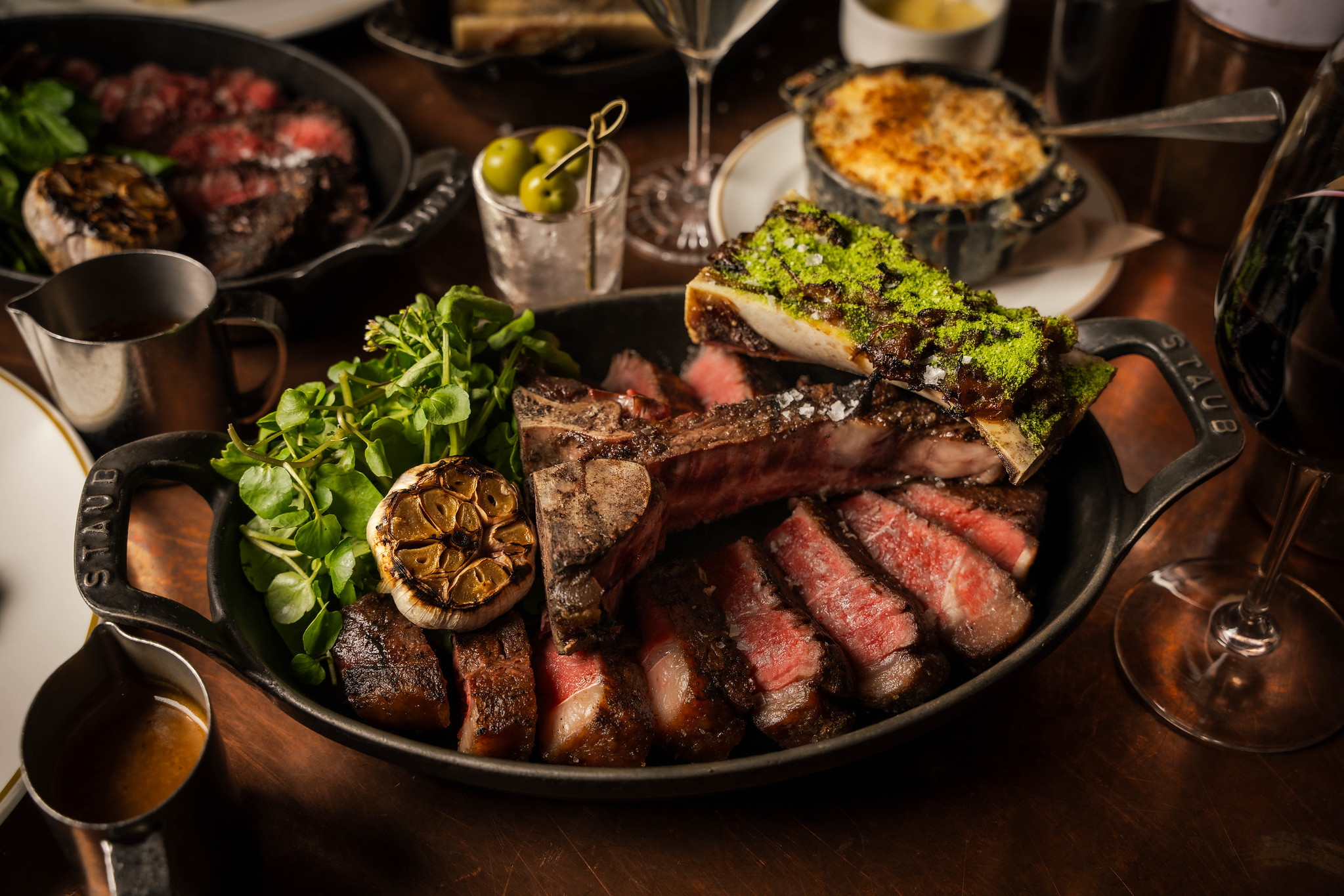
Sliced bone-in steak in a cast-iron dish with herb-crusted bone marrow, roasted garlic and watercress
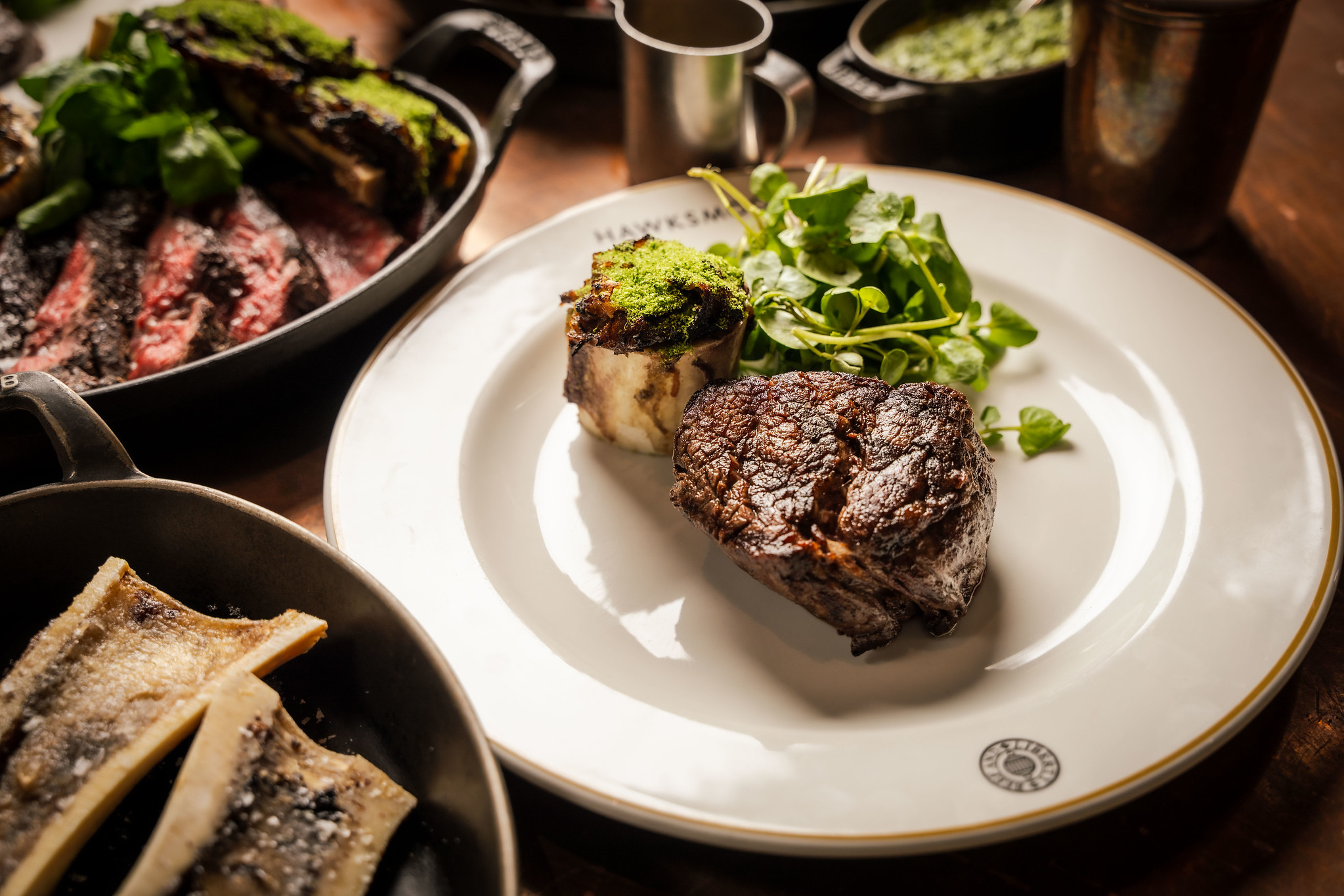
Thick-cut steak on a white plate with herb-crusted bone marrow and watercress, with more steak behind

Not many steakhouses put the farm on the menu. There’s a reason for that.

To us it makes more sense to be straight with people: this is the farm, here’s why we chose them and here’s what makes this steak different. That’s why it’s all there on the menu. 

When we opened in London nearly 20 years ago, we had one mantra: buy the best beef we could find and do right by it. Ever since, we’ve partnered with farms who meet our standards.   

In most cases, sourcing decisions come down to price. We decided early on that wasn’t a place to compromise. Finding the right farms, in truth, takes longer and it costs more, but the difference shows up on the plate in a way that’s hard to fake.  

Some restaurants will tell you the breed, fewer will tell you the farm, and almost none tell you why they chose it. But we think it pays to know all three.   

The cut you see at our place might look similar. The price tag, too. But the beef won’t be. 


book chicago book nycchicago menu NYC menu

Why are we telling you this?

We know not everyone cares about breeding programs and farming practices. That’s fair. But when the ingredient is the point, we think knowing where your steak comes from helps you choose the one you’ll enjoy most.   

Most steakhouses could tell you more about their beef. They choose not to. We’d rather be transparent about the farms we work with and the decisions we’ve made. We source from farmers we’ve visited (and we’ve visited a lot), spoken to and gotten to know. For us, it’s the only way. 

Every team member at Hawksmoor knows why each cut has earned its place on our menu. Please do ask us where the beef is from. We genuinely like that question. 

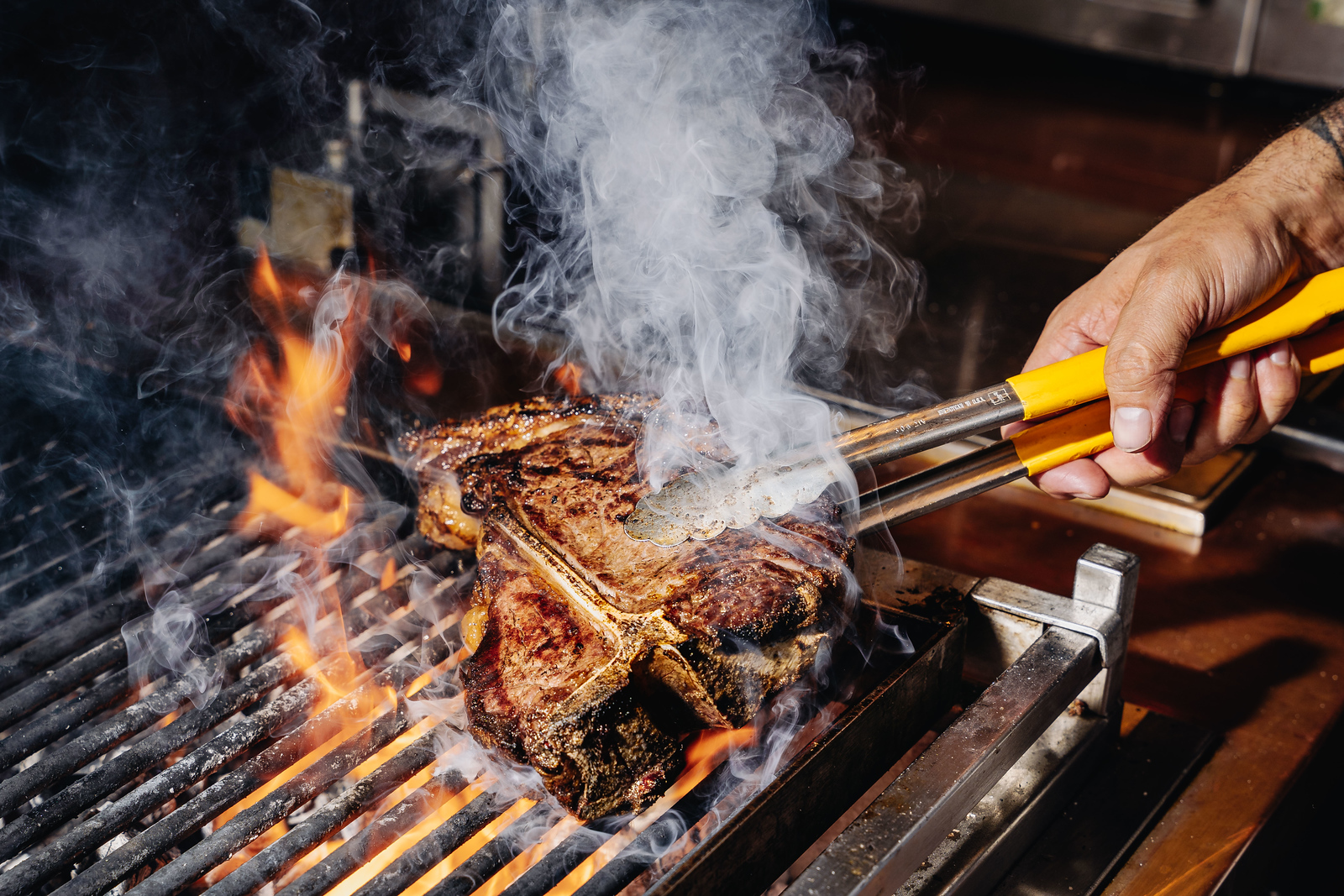
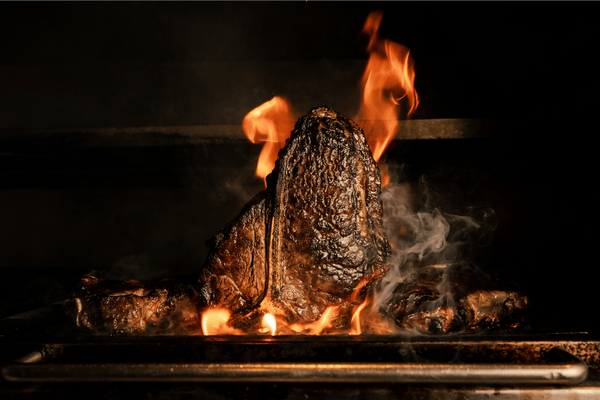
A large steak held with thongs on a grill over open fire

Why we look beyond the USDA grade

The USDA grading system has its place. It tells us about fat marbling, which can influence a steak’s flavor and tenderness. But it doesn’t tell us about the pasture it grazed, the diet it was raised on or the breeding behind it.  

After nearly 20 years of buying beef, we’ve learned that two steaks with the same grade can taste very different.  

Take our two filets. One comes from 100% grass-fed cattle in the Upper Midwest; the other from grain-finished Black Angus raised on the Great Plains. Both are excellent. Both have earned their place on our menu. But the taste and texture are markedly different.  

A grade is one part of the picture. Understanding the rest helps us guide you to the steak you’ll enjoy most. That’s why every cut on our menu is traceable, deliberate, and distinctive. 

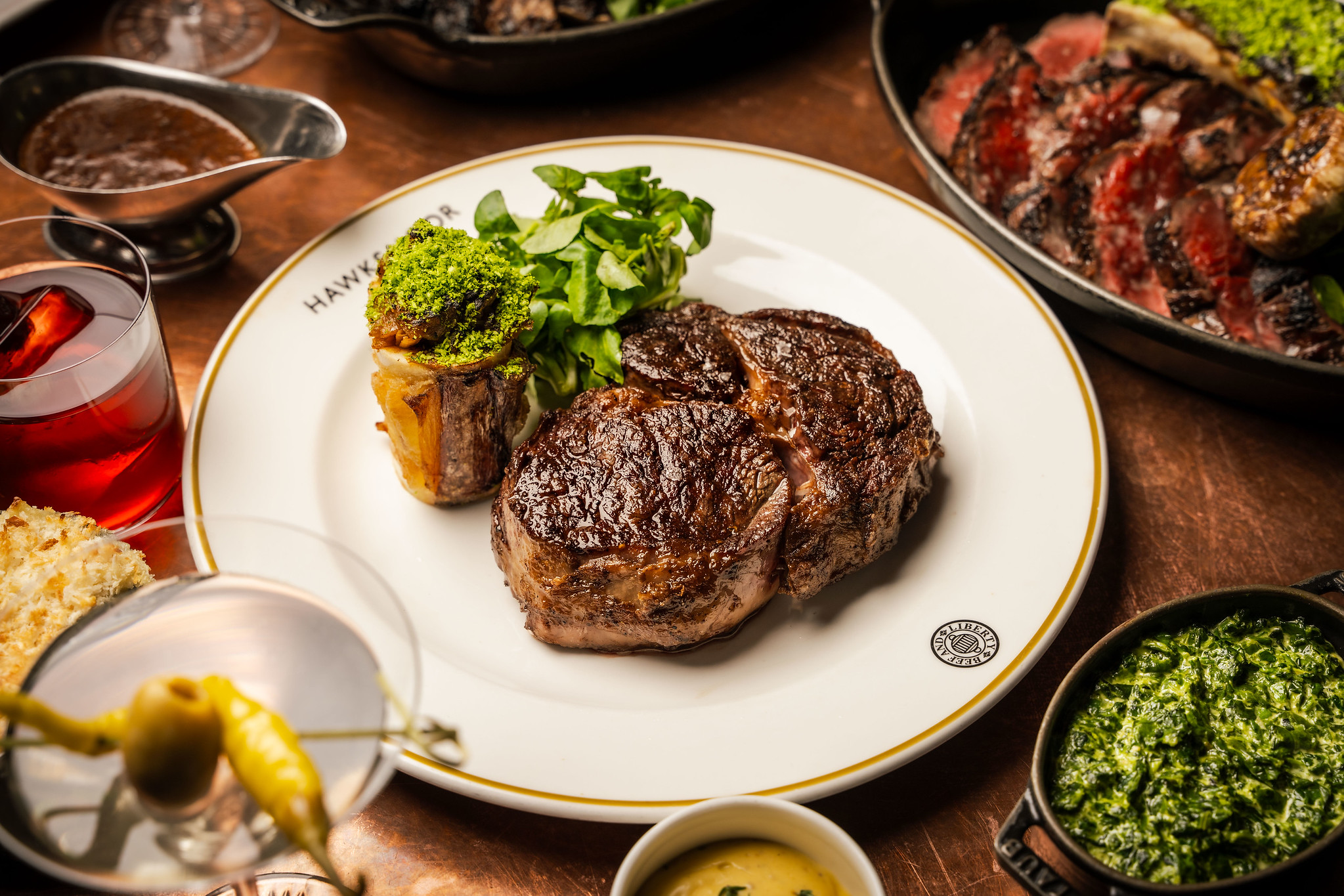
Whole grilled steak on a white plate with herb-crusted bone marrow and watercress, with sides and cocktails around

Get to know our farms

Chatel Farms, Georgia, USA 


A multigenerational family farm in Georgia producing Black Angus and Akaushi Wagyu-cross cattle. Their Angus is the backbone of our beef program: pasture-raised, lightly grain-finished and deeply beefy. The Akaushi cross combines the marbling and tenderness of one of Japan’s native Wagyu breeds with the rich, savory flavor of Black Angus. 


Grass Run Farms, Upper Midwest, USA 


A network of family farms across the Upper Midwest, raising 100% grass-fed and grass-finished Angus cattle. Grazing on a diverse mix of grasses and herbs produces beef with deeper flavor and a slightly firmer texture than grain-fed beef. It also contains naturally higher levels of omega-3s, vitamins and minerals. 


1855 Black Angus, Great Plains, USA 


One of America’s most respected Black Angus programs. Cattle begin life on the grasslands of the Great Plains before being grain-finished to develop the consistency, tenderness and richness we know of classic American beef. It’s the benchmark choice for refinement, luxury and an exceptionally tender filet. 


Altair Wagyu, Tasmania, Australia 


Altair produces one of the world’s most unique steaks: 100% grass-fed Wagyu. Raised on Tasmania’s temperate pastures, their cattle combine Kuroge Wagyu genetics with Angus, Hereford and Shorthorn bloodlines. The result is a steak with impressive marbling and tenderness, but also the deeper, beefier flavor often missing from full-blood Wagyu. 
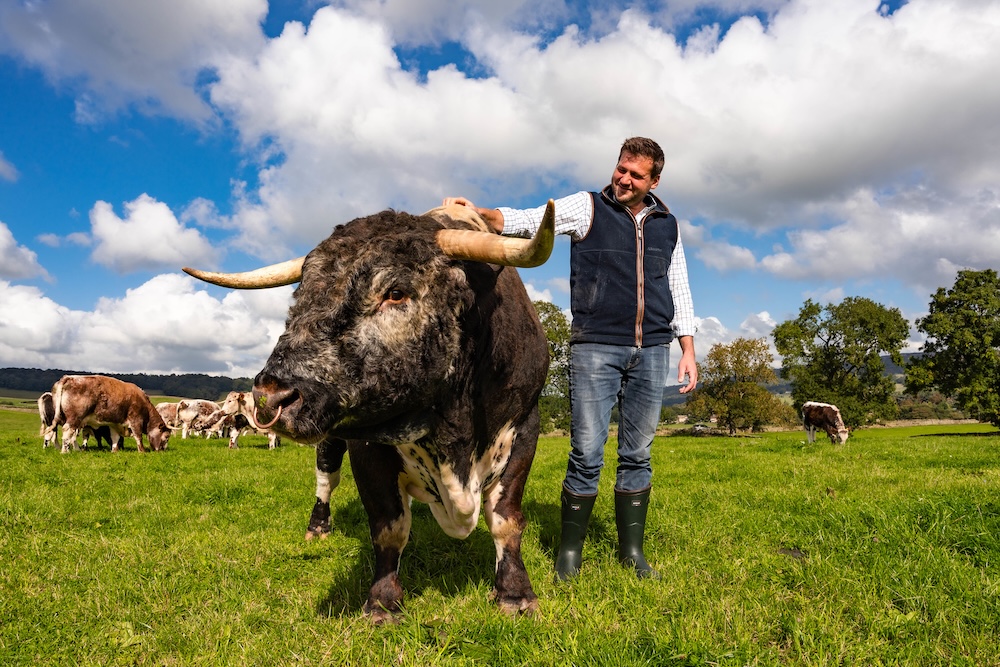
A image of a farmer stood patting the back of a cow with long horns in a green field against the blue sky.

Sometimes you have to break the rules

Hawksmoor sources from the best American farmers and ranchers. It’s a commitment we’ve never wavered from. But then along came Altair Wagyu.  

A few years ago, our friend Mark Schatzker – author of Steak: One Man’s Search for the World’s Tastiest Beef – called us raving about a 100% grass-fed Wagyu he’d eaten. It was unlike anything he’d tasted before. It was made by Altair Wagyu in Tasmania, Australia.  

Eventually, we had the opportunity to try it ourselves. Then we tried it again. And, well, Mark was right. Rich, complex, tender – it’s more complete than full-blood Wagyu and more extraordinary than a conventional steak. We had to have it on the menu.  

Developing meaningful Wagyu marbling on grass feeding alone is considered virtually impossible. By crossing Kuroge Wagyu with Angus, Hereford and Shorthorn – then raising the cattle on pristine Tasmanian pasture – Altair has created something genuinely special.  

We made this one exception because we haven’t found anything else quite like it. 

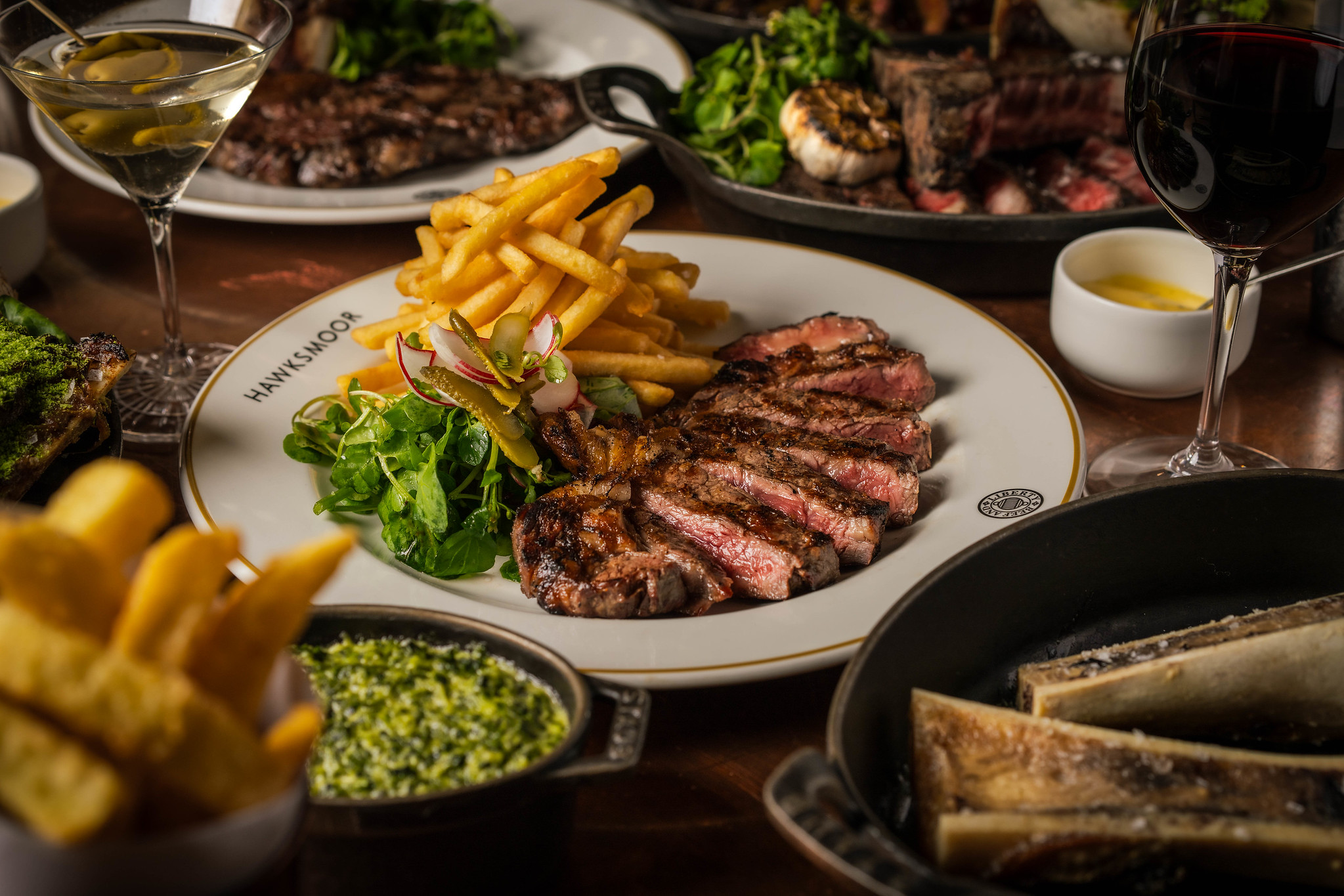
Sliced grilled steak on a white plate with fries and watercress, with bone marrow and wine nearby

The truth about Wagyu

Wagyu – literally “Japanese cow” – is the collective name for four native Japanese breeds whose genetics produce far more intramuscular fat, or marbling, than most cattle. As that marbling melts during cooking, it gives Wagyu its characteristic richness and tenderness.  

Almost all Wagyu served outside Japan is crossbred. Done well, those crosses can combine Wagyu’s marbling with the deeper, beefier flavor of breeds like Angus and Hereford.   

But a lot of commercial programs rely on intensive confinement and prolonged grain-finishing to maximize marbling. Our two Wagyu programs are crosses raised with genuine care for the animal. Happier cows make better beef. 

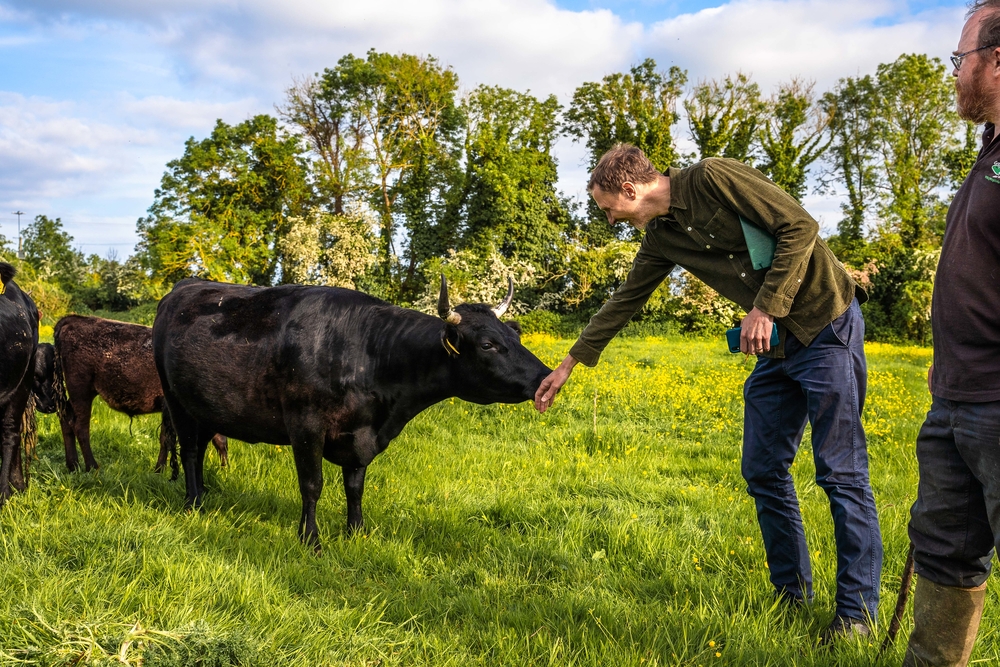
The Hawksmoor founder Huw pictured in a green meadow letting a small black cow smell his hand on a summers day.

What happens in our kitchens

Great beef is only the beginning. Once it arrives at our restaurants, every decision is designed to get the best from it. Some cuts are dry-aged to concentrate flavor and deepen their character. Others are wet-aged to preserve a cleaner, more delicate profile.  

Every steak is cooked over handcrafted charcoal, made from red and white oak in Virginia. The fire burns hot and clean, creating a deep crust, while adding a subtle smokiness and sweetness that complements rather than dominates.  

After cooking, every steak is properly rested so the juices can redistribute and the muscle fibers can relax. Finally, every steak comes with roasted bone marrow. Spoon it over your steak and it amplifies some of the most important flavor compounds in the beef itself. 

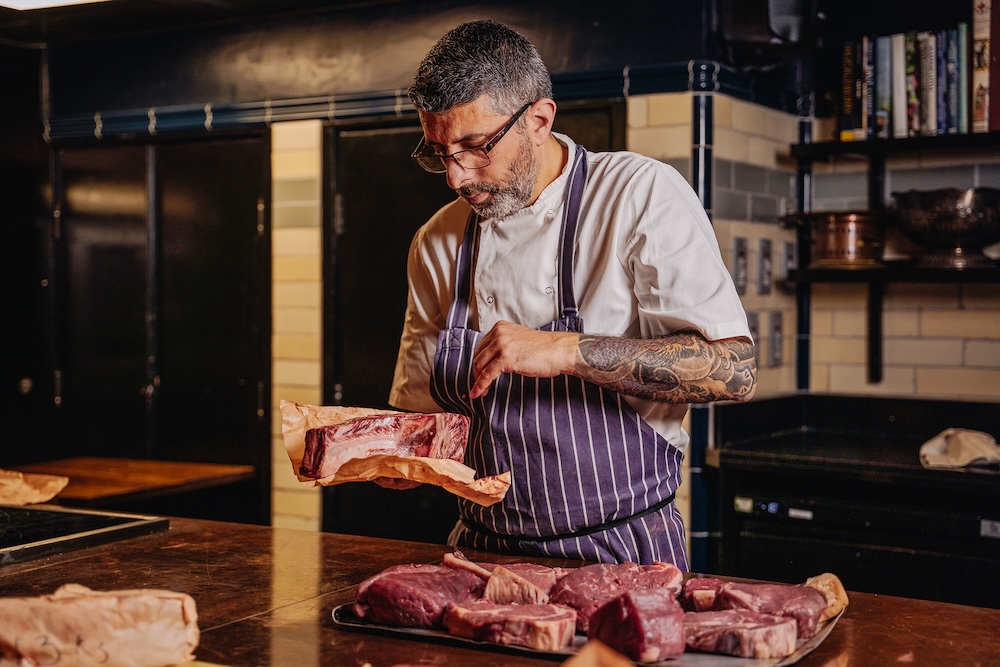
A chef, in chefs whites and a blue apron inspecting different cuts of steaks laid out on the table in front of him in a kitchen.

Five things that matter to us

  1. Origin – quality starts on the farm and in the field 
  2. Welfare – how an animal eats and lives influences how it tastes. 
  3. Breed – for the best mix of marbling, tenderness and depth of flavor. 
  4. Land – pasture, climate and farming practices all shape the final steak. 
  5. Craft – aging, charcoal, resting and serving – to honor the beef properly. 
A large steak on a charcoal grill, with flames licking the sides of it.
The owner of this website has made a commitment to accessibility and inclusion, please report any problems that you encounter using the contact form on this website. This site uses the WP ADA Compliance Check plugin to enhance accessibility.